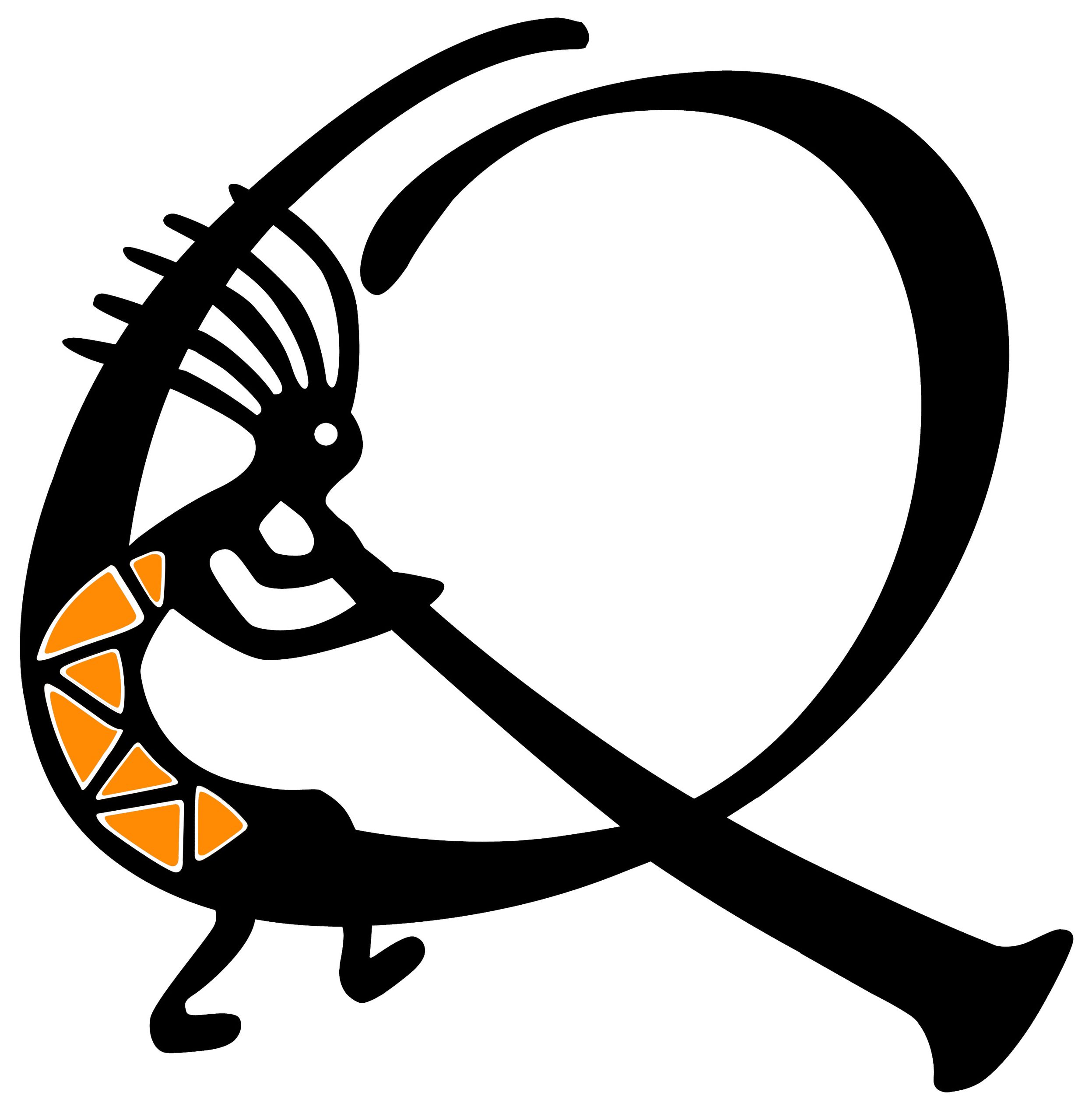
Kokopelli Lore
Distinguished by his hunchback, dancing pose, and flute, Kokopelli holds the unique honor of being the only anthropomorphic petroglyph with a proper name, a distinct identity, and an established gender.
His name likely derives from the Zuni word for god (Koko) and the Native name for the Desert Robber Fly (pelli). The insect connection isn’t as random as it sounds—the robber fly also sports a noticeable hump and a prominent proboscis.
To the Hopi, he is known as Kokopilau (meaning “wood hump”), while other traditions call him Kokopele, Kokopetiyot, or Olowlowishkya. He also earned a rather colorful moniker: the “Casanova of the Cliff Dwellers.” His lesser-known female counterpart goes by Kokopelli Mana.
The Image
While legends vary, the classic image depicts a hunchbacked flute player in mid-dance, topped off with a festive crest. Occasionally, ancient depictions included rather pronounced male genitalia. Ceramics painted ten centuries ago by the Hohokam (Arizona Pueblo) established the blueprint for modern depictions.
- The Hump: Represented as an arc covering either his full back or just the lower half.
- The Stance: His arms typically form a downward “V” toward the earth. His legs trace the contours of his body—the front leg continuing the arc of his hump, and the rear leg extending the front line of his torso.
- The Flute: Technically a nose flute, it is drawn as a straight or slightly curved line, sometimes ending in a clarinet-like bulb.
- The Crest: Usually features an even number of elements. In Pueblo culture, these represent the paired antennae of the katydid (grasshopper). When depicted in the Spirit World, these elements become feathers; in other tradition, they represent rays of light.
When present, Kokopelli’s phallus projects upward to symbolize human fertility and the seed of life—a feature clearly displayed on a thousand-year-old bowl at Mesa Verde National Park. Over time, his image was notably “cleaned up” (and de-emphasized), largely due to the influence of Catholic missionaries. Modern representations typically dress him in a modest kilt and sash.
Contemporary artists have playfully depicted Kokopelli as a golfer, scuba diver, skier, or rock star. While there is no historical evidence to support most of these hobbies, the “rock star” label is undeniably accurate—he has, after all, been featured on Southwestern rocks for centuries.
The Legends
Kokopelli’s origin as a deity is difficult to fully reconstruct, but ancient artifacts make it clear he was central to many Native American tribes, especially the Anasazi of the Four Corners region. Today, he remains revered by descendants including the Hopi, Taos, and Acoma Pueblo peoples. His enduring popularity stems from a whimsical, generous nature that seemed to bring out the best in everyone.
Throughout history, Kokopelli played many roles:
- Harbinger of Fertility & Harvest: For the Anasazi, his arrival signaled a successful corn planting season. The Navajo revered him as a benign deity of harvest and abundance who brought rain, while the Zuni viewed him as a Rain Priest.
- Healer & Matchmaker: Hopi women sought him out for help with childbearing. According to Hopi lore, Kokopelli spent his days sowing seeds and charming the village maidens, while his wife, Kokopelli Mana, actively pursued the local men. The Winnebago held a slightly more bizarre belief: that he could detach his penis and send it floating downriver to visit maidens bathing downstream.
- The Traveling Trader: Southern Utah lore describes him as a traveler carrying corn seed, teaching farming, and trading beads for turquoise. This may stem from real-world Mesoamerican traders who announced their arrival by playing flutes.
- The Sacred Sack: Myths differ on what he carried on his back. Suggestions range from seeds, babies, and blankets, to clouds filled with rainbows (Navajo), to woven shirts used to barter for brides (Hopi). Others say his sack contained the seeds of every flower in the world, which he scattered each spring.
- The Wandering Minstrel: San Ildefonso legend paints him as a musician trading new songs for old. His music brought warmth, melted the snow, coaxed the sun out, and inspired good dreams.
- The Modern Lucky Charm: In 1998, when Kevin & Drew traveled to Tempe, Arizona, to watch the Tennessee Volunteers cap off an undefeated season with a Fiesta Bowl National Championship win, they were introduced to Kokopelli for the first time. He instantly became a lucky charm that sparked a grand tradition: the annual KokOasis Challenge. Today, the KokOasis Challenge brings community and college sports together under one banner—uniting family, old friends, and new faces, with a reminder that there’s always room in the stands for one more.
Whether viewed as a trickster, healer, trader, or the Southwest’s original traveling journalist, Kokopelli remains one of the most charismatic and enduring figures in ancient American mythology.